The archives
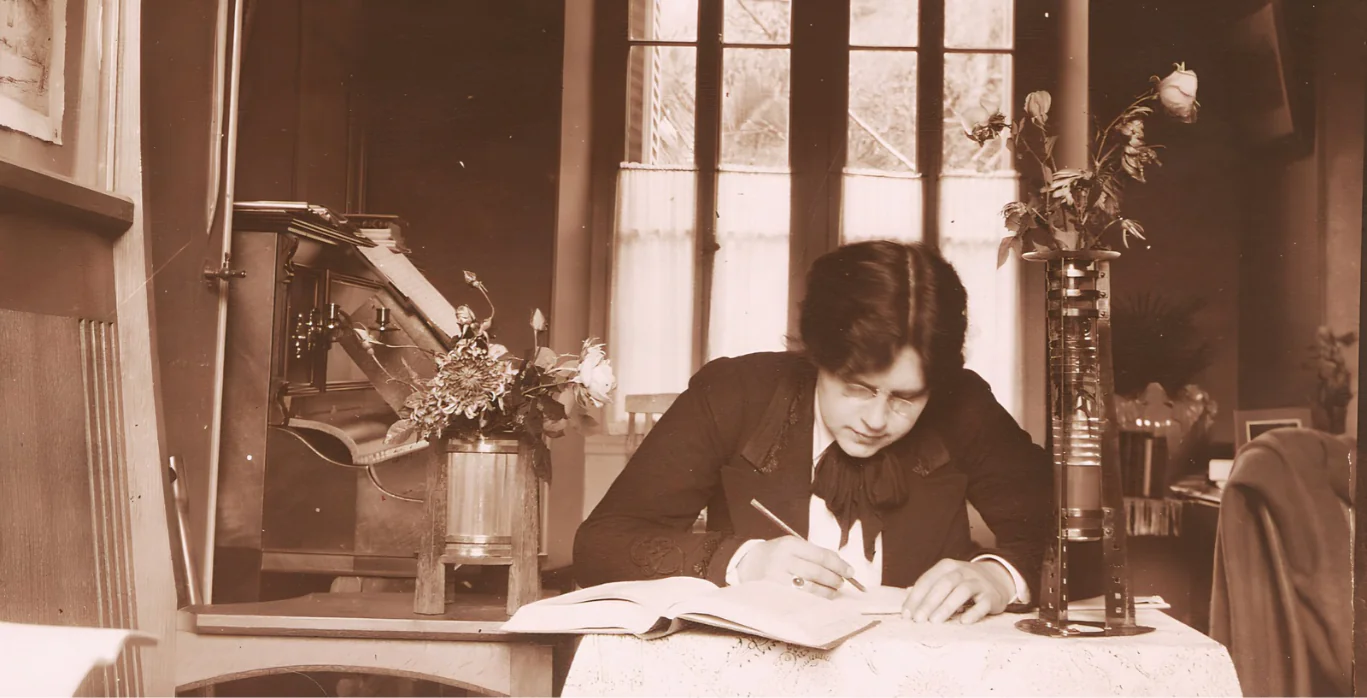
The archives of Nadia and Lili Boulanger form an exceptional heritage, documenting their work as composers, their teaching, their musical careers, and their personal lives. Held by several institutions in France and abroad, these collections include, among other things, manuscript and printed scores, correspondence, notebooks, photographs, concert programs, teaching materials, personal papers, and Nadia Boulanger’s music library. Taken together, they show the richness and diversity of the documentary legacy left by the two musicians.
Bibliothèque nationale de France (BnF) – Paris
Music Department

History
After Nadia Boulanger’s death, her executor, Annette Dieudonné, distributed all the objects and documents in the apartment on rue Ballu among several institutions: the Fondation Lili et Nadia Boulanger (founded in 1983, now the Centre Nadia et Lili Boulanger), the Harvard University Library, the Bibliothèque polonaise de Paris, the Musée de la Musique, the library of the Conservatoire national supérieur de musique de Lyon, and the Bibliothèque nationale. In 2025, the CNLB donated to the BnF the archives of Nadia and Lili Boulanger that it had held until then. Because the collection is still being processed, access is subject to a waiting period.
For inquiries about this collection (shelfmark: VM FONDS 296 BLG), please write to: musrich.archives@bnf.fr
Description
This collection contains the documents kept by Nadia Boulanger and later by the Centre Nadia et Lili Boulanger: manuscript and printed scores by Nadia and Lili Boulanger, Nadia Boulanger’s class and lecture notes, photographs, correspondence, concert programs, and other papers of the two sisters. It also includes archives relating to their father, Ernest Boulanger, and archives concerning Marcelle de Manziarly.
Terms of use
Reproduction of unpublished archival documents and unpublished scores requires the permission of the Centre Nadia et Lili Boulanger.
Conservatoire national supérieur de musique et de danse de Lyon
Médiathèque Nadia-Boulanger

History
In a letter dated February 20, 1980, to Pierre Cochereau, then director of the CNSM, Annette Dieudonné explained Nadia Boulanger’s wishes: “Mademoiselle Boulanger’s music library will indeed be given to a music school, as she had expressed the wish that it be of use to students. I would be particularly happy if the new Conservatoire National Supérieur de Musique de Lyon could benefit from it.” The musicologist Roberte Machard was commissioned to draw up a detailed inventory in the rue Ballu apartment before the documents left for the Conservatoire. On December 23, 1980, Annette Dieudonné wrote to Pierre Cochereau: “Here is the list of the boxes that have been shipped to you.” The note came with a list of 140 boxes. A remainder of “several boxes (about 60 kg) and a bust” was shipped on December 29, 1981.
Description
The documents inherited by the CNSMD de Lyon make up most of Nadia Boulanger’s music library. The collection comprises about 8,000 scores and 950 books on music and musicians, as well as a collection of music periodicals.
Part of this library came from Nadia Boulanger’s forebears: her paternal grandmother, Marie-Julienne Halligner, known as Marie-Julie Boulanger (1786–1850), and her father, Ernest Boulanger (1815–1900). It includes vocal scores of operas, mélodies, and singing treatises, all representative of the nineteenth-century French vocal repertoire. Some of these documents bear ownership marks and signs of use that attest to this cultural inheritance. Nadia Boulanger kept adding to the library until the end of her life, through purchases and through gifts (tributes from composers, former students, and publishers). From Perotin’s Organa and a facsimile of Petrucci’s Harmonices musices Odhecaton to the works of Luciano Berio, Iannis Xenakis, and Tôn-Thât Tiêt, the collection reflects the open-mindedness and breadth of Nadia Boulanger’s musical culture.
Nadia Boulanger’s importance in the early music revival is well known, and a good part of her library also reflects this interest, reaching well beyond J.S. Bach or C. Monteverdi. Another sign of her wide curiosity is the substantial number of books and scores devoted to the popular and folk music of many countries. Some of these scores have not yet been cataloged, but they appear in the inventory that Roberte Machard drew up in December 1980, before the collection was transferred to the CNSM.
Finally, the collection contains scores of works by Ernest, Lili, and Nadia Boulanger (including orchestral parts and autograph manuscripts), as well as printed and manuscript scores (autographs and/or copyists’ manuscripts) of works composed by Nadia Boulanger’s students. A number of boxes also held documents related to her teaching: annotated orchestral and choral parts, annotated concert materials, course notes, competition papers, exercises, and more. Kept in the storage rooms of the CNSMD Lyon and only partly inventoried, this archival collection remains largely unexplored to this day.
Library of Congress – Washington
Music Division

Description
At the Library of Congress in Washington, the archives related to Nadia Boulanger are spread across several collections that testify to her rich ties with American musical life. The Harriet Winslow Collection of Nadia Boulanger Materials brings together photographs, concert programs, and press clippings, including many documents sent by Boulanger to Harriet Winslow. It makes it possible to follow her activities in the United States, her travels, and her teaching at the American Conservatory at Fontainebleau.
Nadia Boulanger also appears in the archives of several musicians who were her students, friends, or collaborators. The Aaron Copland, Leonard Bernstein, Serge Koussevitzky, Louise Talma, and Harold Bauer collections hold correspondence, photographs, writings, and teaching materials. The Louise Talma papers in particular include notes and exercises in composition, counterpoint, harmony, and fugue that offer valuable evidence of Boulanger’s teaching. Together, these documents shed light on the reach of her networks, her teaching methods, and the lasting influence she had on several generations of musicians in the United States.
Summary of collections
Photographs, letters, annotated scores, and other documents related to Nadia Boulanger can be found in the following collections:
- Ross Lee Finney Correspondence
- Louise Talma Papers
- Lopatnikoff Collection – General Correspondence
- Leonard Bernstein Collection
- Koussevitzky Archive
- Jascha Heifetz Collection
- Igor Stravinsky Family Correspondence
- Harriet Winslow Collection of Nadia Boulanger Materials
- Harold Bauer Collection
- Florence Parr-Gere Papers
- Elliott Carter Music Manuscripts and Other Papers
- Elizabeth Sprague Coolidge Foundation Collection
- Edward and Marian MacDowell Collection
- Damrosch-Blaine Collection
- American Conservatory at Fontainebleau Records
- Aaron Copland Collection
- Charles Fox papers (processing in progress)
This list of collections is not exhaustive, and other relevant documents may exist at the Library of Congress. You can contact the Music Division through its Ask a Librarian service.
Harvard University – Cambridge
Houghton Library
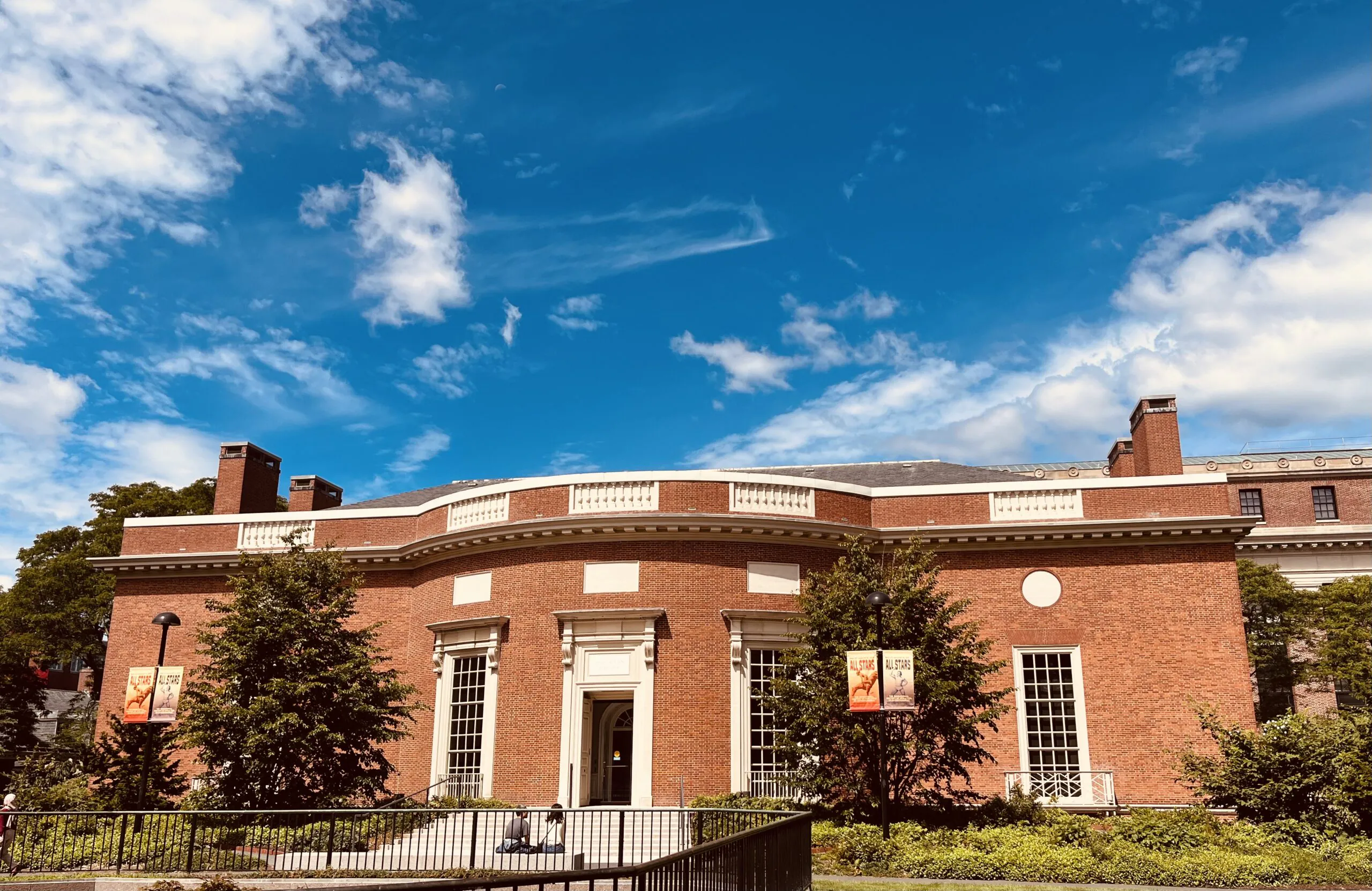
Drawn from Nadia Boulanger’s personal library, a collection titled “Nadia Boulanger: Collection of Americana” can be consulted at the Houghton Library. It brings together nearly 900 items dated from 1922 to 1977, including photostat copies and manuscripts of works composed under Boulanger’s guidance. Many are signed by their composers and often come with notes, letters of thanks, or dedications. The distinguished American students of Nadia Boulanger represented in the collection include Marc Blitzstein, Ross Lee Finney, Douglas Moore, Walter Piston, Joe Raposo, and Roger Sessions.
University Archives
Letters, photographs, and official documents related to Nadia Boulanger can be found in the following collections:
- Robert Woods Bliss and Mildred Barnes Bliss, Photographs, 1860s–1960s
- Robert Woods and Mildred Barnes Bliss, Series I, Personal Papers, 1878–1967
- Harvard University Office of News and Public Affairs records
- General correspondence Edward Waldo Papers
Radcliffe Institute for Advanced Study – Cambridge
Schlesinger Library
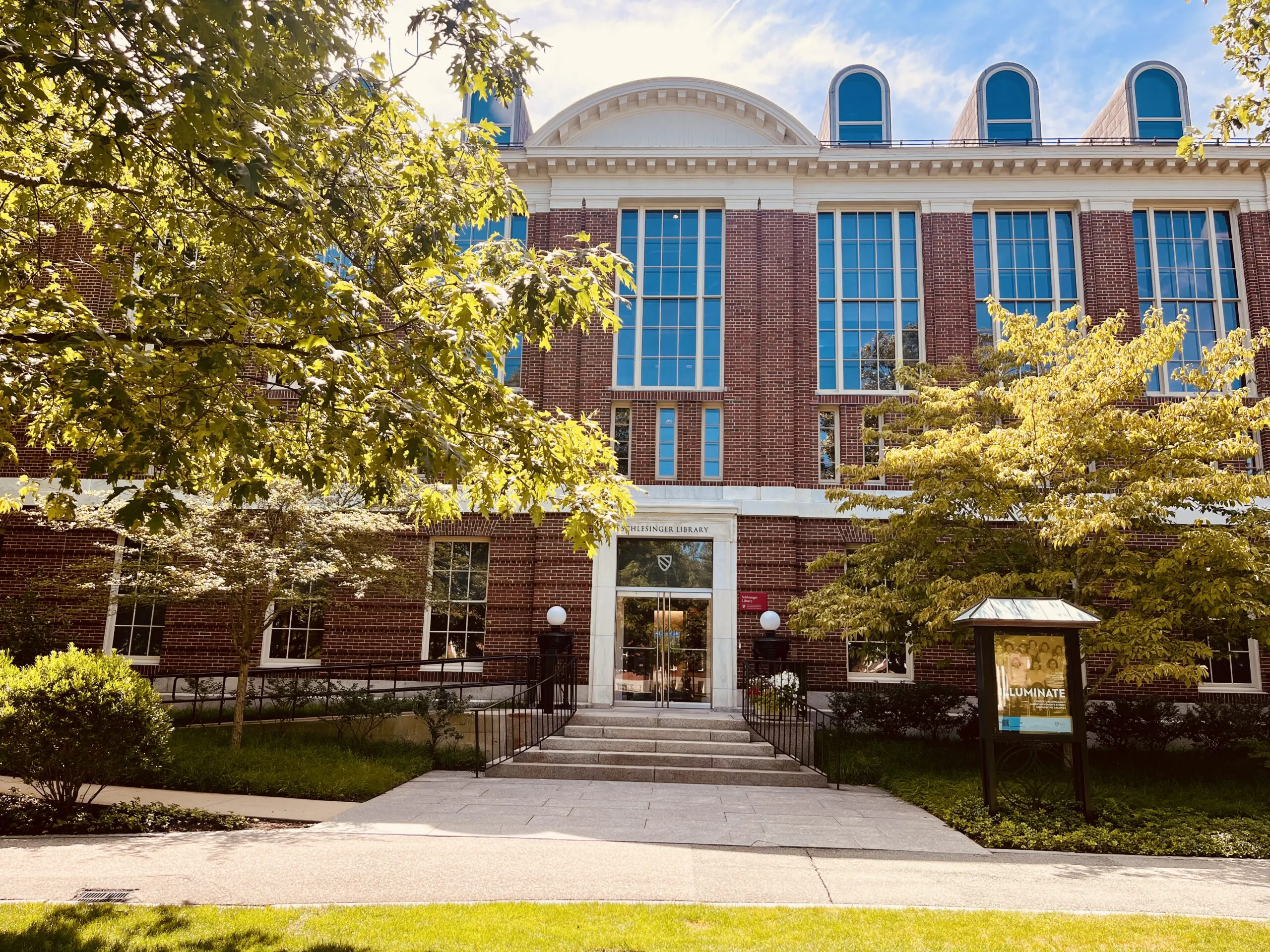
Letters, photographs, and official documents related to Nadia Boulanger can be found in the following collections:
- Suzanne Amelie Wunder Papers
- Radcliffe College Archives Biography Files
- Publicity Office Records
- Photograph album by Kathryn Edith Lutz, 1934–1940
- Office of the President
- Mildred Buchanan Flagg
- Mabel Wheeler Daniels
- Judy Chicago Papers
- Gattie P. Holmes
- Ann Radcliffe Lectures
Cité de la musique – Paris
Musée de la musique

In 1981, the Musée de la musique (Cité de la musique) received the entire contents of Nadia Boulanger’s salon, which held an organ, three pianos (among them the 1928 Steinway), a clavichord, and a balalaika.
Alongside the instruments, artworks, and furniture are the books and mementos that filled this reception room and turned it into a place of study and remembrance. These objects of every kind bear witness to the musician’s attachment to her family, to her Russian roots, and to her friends.
Books and photographs of writers and composers such as Paul Valéry and Igor Stravinsky, some of them inscribed, crowd the pianos and shelves. Yet out of this throng of figures one presence stands out everywhere: that of her sister, Lili Boulanger. There are many portraits of her, and one of them dominates the salon: her marble bust, made in 1918, the very year of her death, by the artist Lucienne Heuvelmans.